
The working principle of the automobile steering gear
author: GUANGZHOU FUCHI AUTOMOBILE PARTS CO., LTD.
2026-01-28
When a car is moving, it often needs to change its direction of travel. Moreover, when the car is moving straight, the steering wheels are often affected by lateral interference forces from the road surface, causing them to automatically deflect and change the direction of travel. At this time, the driver needs to use a set of mechanisms to deflect the steering wheels in the opposite direction, thereby enabling the car to return to its original direction of travel. This special set of mechanisms used to change or restore the car's direction of travel is called the steering system.

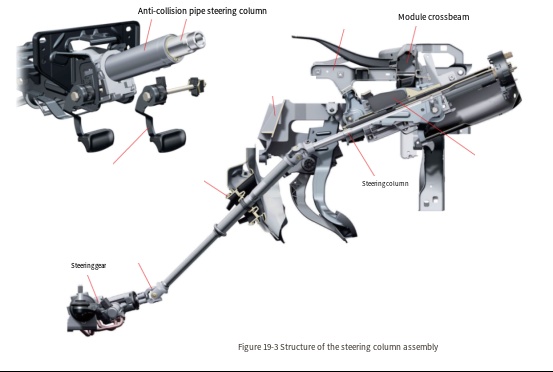
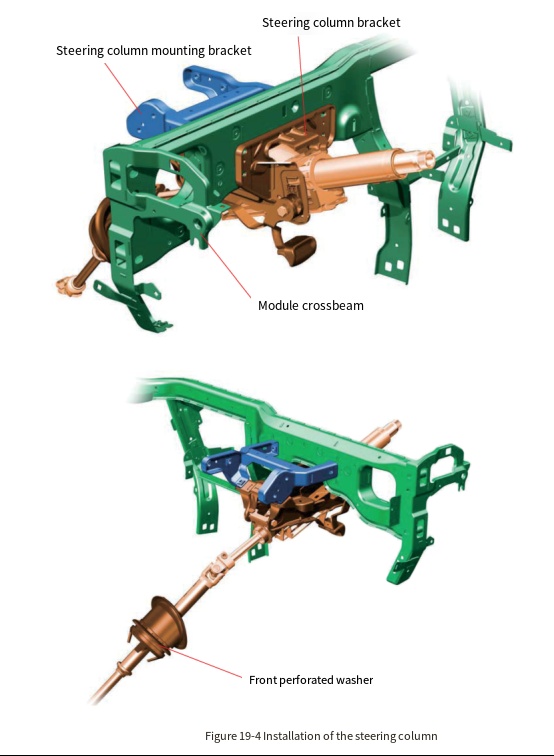
The steering wheel is connected to the steering column, so when the driver turns the steering wheel, the steering column rotates accordingly. Through the steering knuckle and the intermediate steering shaft, the steering torque is transmitted to the input shaft of the steering gear. The rotation of the input shaft is converted into reciprocating motion or linear motion by the rack-and-pinion steering gear, which pushes or pulls the steering linkage and steering knuckle, causing the steering wheels (front wheels) to deflect at a certain angle. The working principle of the rack-and-pinion steering system is shown in Figure 19-2. The steering gear is a set of rack-and-pinion transmission mechanisms that convert rotational motion into linear motion (or approximately linear motion), and at the same time play a role in reducing speed and increasing torque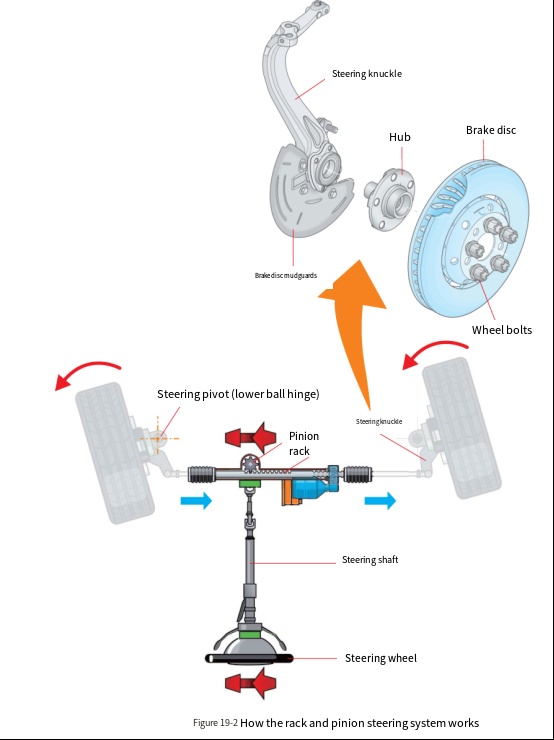
The composition of the Electrically Controlled Hydraulic Power Steering system (EPHS) is shown in Figure 19-6. This system overcomes the shortcomings of the traditional hydraulic power steering system. The steering power pump it uses is no longer driven by the engine drive belt but by an electric motor. The electronic control unit adjusts the rotational speed of the electric motor and the resulting steering oil flow according to the vehicle's driving speed and steering angular velocity, enabling the steering assist torque to be continuously adjustable, thus meeting the steering assist torque requirements at high and low speeds.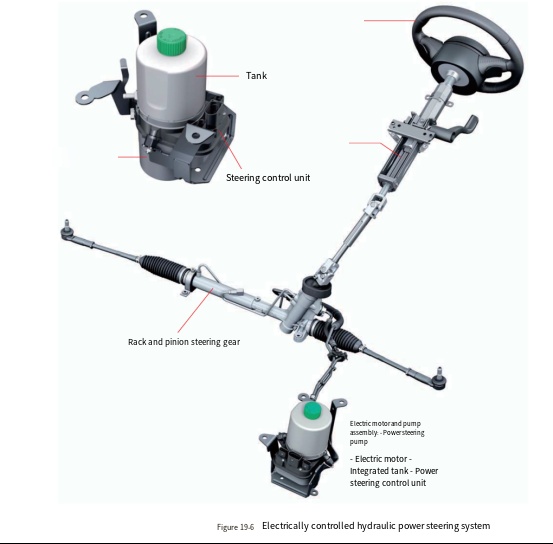
Electric Power Steering System (EPS)

The steering wheel is connected to the steering column, so when the driver turns the steering wheel, the steering column rotates accordingly. Through the steering knuckle and the intermediate steering shaft, the steering torque is transmitted to the input shaft of the steering gear. The rotation of the input shaft is converted into reciprocating motion or linear motion by the rack-and-pinion steering gear, which pushes or pulls the steering linkage and steering knuckle, causing the steering wheels (front wheels) to deflect at a certain angle. The working principle of the rack-and-pinion steering system is shown in Figure 19-2. The steering gear is a set of rack-and-pinion transmission mechanisms that convert rotational motion into linear motion (or approximately linear motion), and at the same time play a role in reducing speed and increasing torque
Hydraulic power steering system
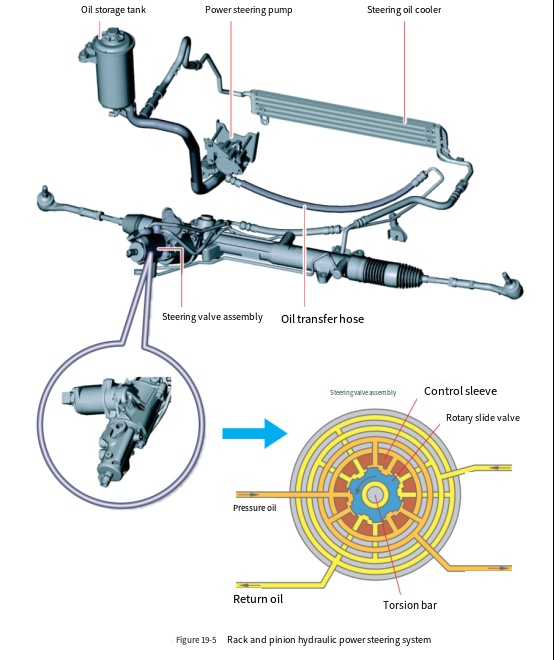
The mechanical hydraulic power steering system mainly consists of two parts: the rack-and-pinion steering structure and the hydraulic system (including the hydraulic power pump, hydraulic cylinder, piston, etc.). Its working principle is that the hydraulic pump (driven by the engine belt) provides oil pressure to push the piston, which in turn generates auxiliary force to push the steering tie rod, assisting the wheel steering.
The composition of the Electrically Controlled Hydraulic Power Steering system (EPHS) is shown in Figure 19-6. This system overcomes the shortcomings of the traditional hydraulic power steering system. The steering power pump it uses is no longer driven by the engine drive belt but by an electric motor. The electronic control unit adjusts the rotational speed of the electric motor and the resulting steering oil flow according to the vehicle's driving speed and steering angular velocity, enabling the steering assist torque to be continuously adjustable, thus meeting the steering assist torque requirements at high and low speeds.
Electric Power Steering System (EPS)
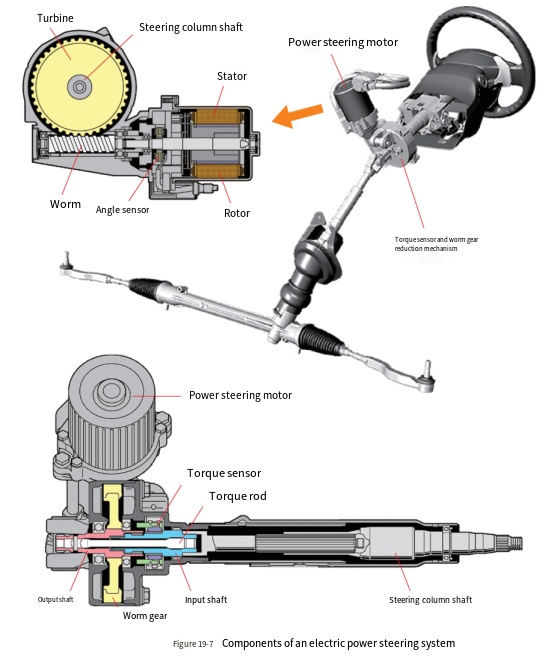
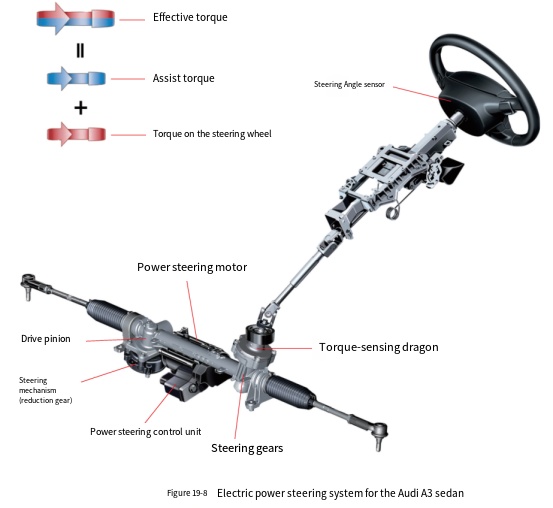
The electronic power steering system (EPS) (as shown in the figure below) is an electric power steering system that directly relies on an electric motor to provide auxiliary torque. This system uses a microcomputer to control the direction and amplitude of the motor current, eliminating the need for complex control mechanisms. The motor, reduction mechanism, steering column, and steering gear can be integrated into a single unit.
Disclaimer: This article is shared solely for the purpose of disseminating knowledge related to automobile chassis. Its copyright belongs to the original author, and we thank the original author for their hard work. If there are any objections regarding infringement, please contact us to negotiate or request removal. Thank you!
Introduction to Steer-by-Wire System
Related Article

Fuchi Automotive Parts Co., Ltd. primarily produces power steering pumps, steering gears, and other related products. With stable product quality, mature production processes, and efficient supply capabilities, we have earned the recognition and trust of numerous customers. Fuchi Automotive Parts Co., Ltd. looks forward to cooperating with global customers to achieve mutual benefit and create a new future for the automotive parts industry.
Fuchi Automotive Parts Co., Ltd. looks forward to working hand in hand with global customers to achieve win-win results and create a new future for the automotive parts industry.